Sortowanie
Źródło opisu
Legimi
(8)
Forma i typ
E-booki
(8)
Autor
Bramwell Colin
(1)
Celan Paul
(1)
Goodison Lorna
(1)
Lang V.R. 'Bunny'
(1)
Meynell Alice
(1)
Orde Julian
(1)
Roberts Lynette
(1)
Sachs Nelly
(1)
Rok wydania
2020 - 2026
(8)
Kraj wydania
Polska
(8)
Język
polski
(8)
8 wyników Filtruj
E-book
W koszyku
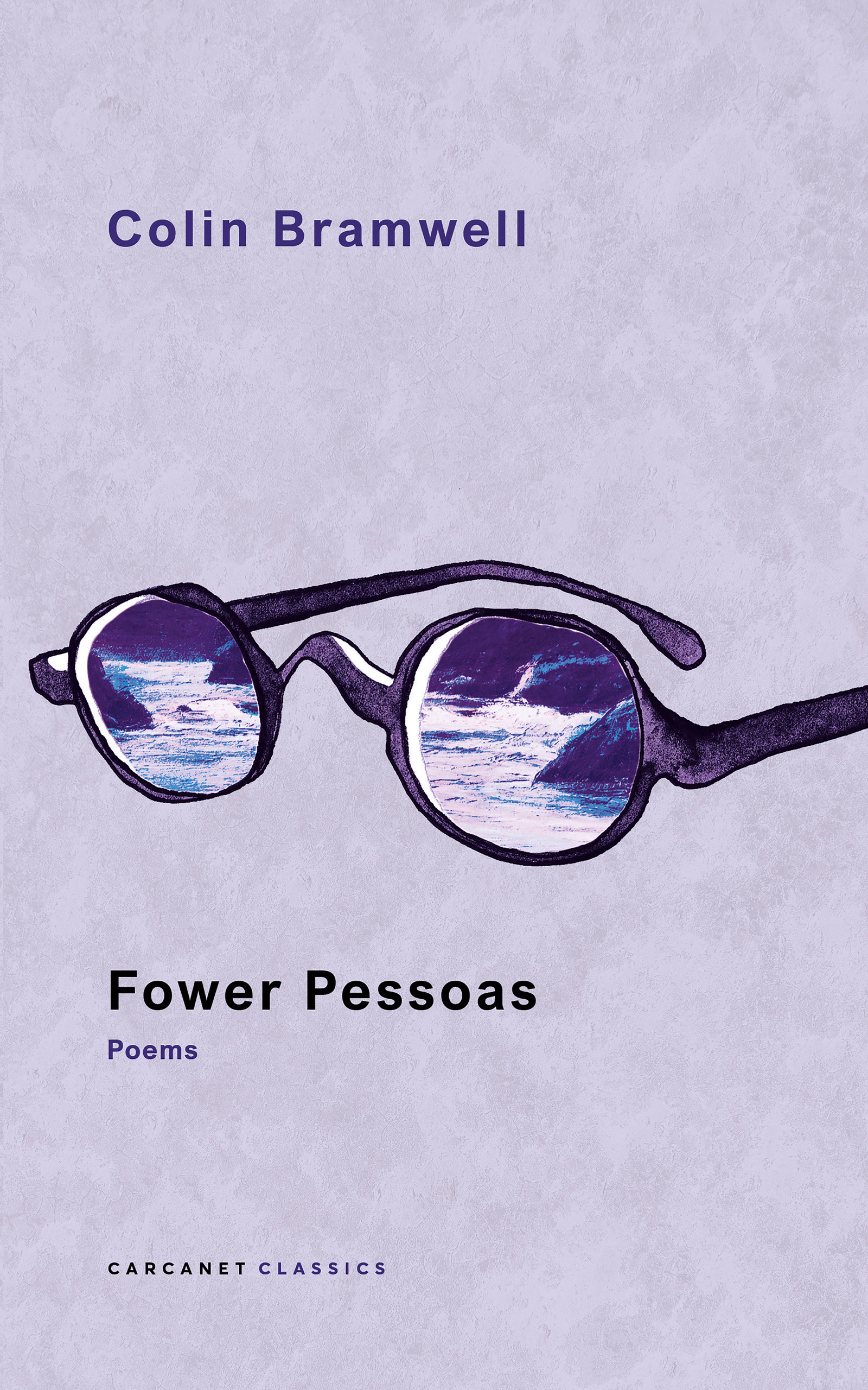
Fower Pessoas is the most original work of translation that you will read this year: a bold reimagining of Fernando Pessoa's poetry by an exciting next-generation Scottish poet. Following his subject's unique approach to composition, Colin Bramwell puts all four of Pessoa's heteronyms into a present-day Scots-language vernacular, and so creates a parochial Pessoa for our own times. Bramwell's adaptation matches his subject's restless lyricism. It is rare to see a translator go toe-to-toe with their subject in this way. The resulting entanglement makes for some astonishing, full-throated poetry. Readers will be delighted by this witty, emotive and artful reinterpretation of an indispensable European poet. Fower Pessoas not only celebrates Pessoa's extraordinary range of modes and moods, but also marks the arrival of an outstanding new talent in Scottish poetry.
Ta pozycja jest dostępna przez Internet. Rozwiń informację, by zobaczyć szczegóły.
Dostęp do treści elektronicznej wymaga posiadania kodu dostępu, który można odebrać w bibliotece.
E-book
W koszyku
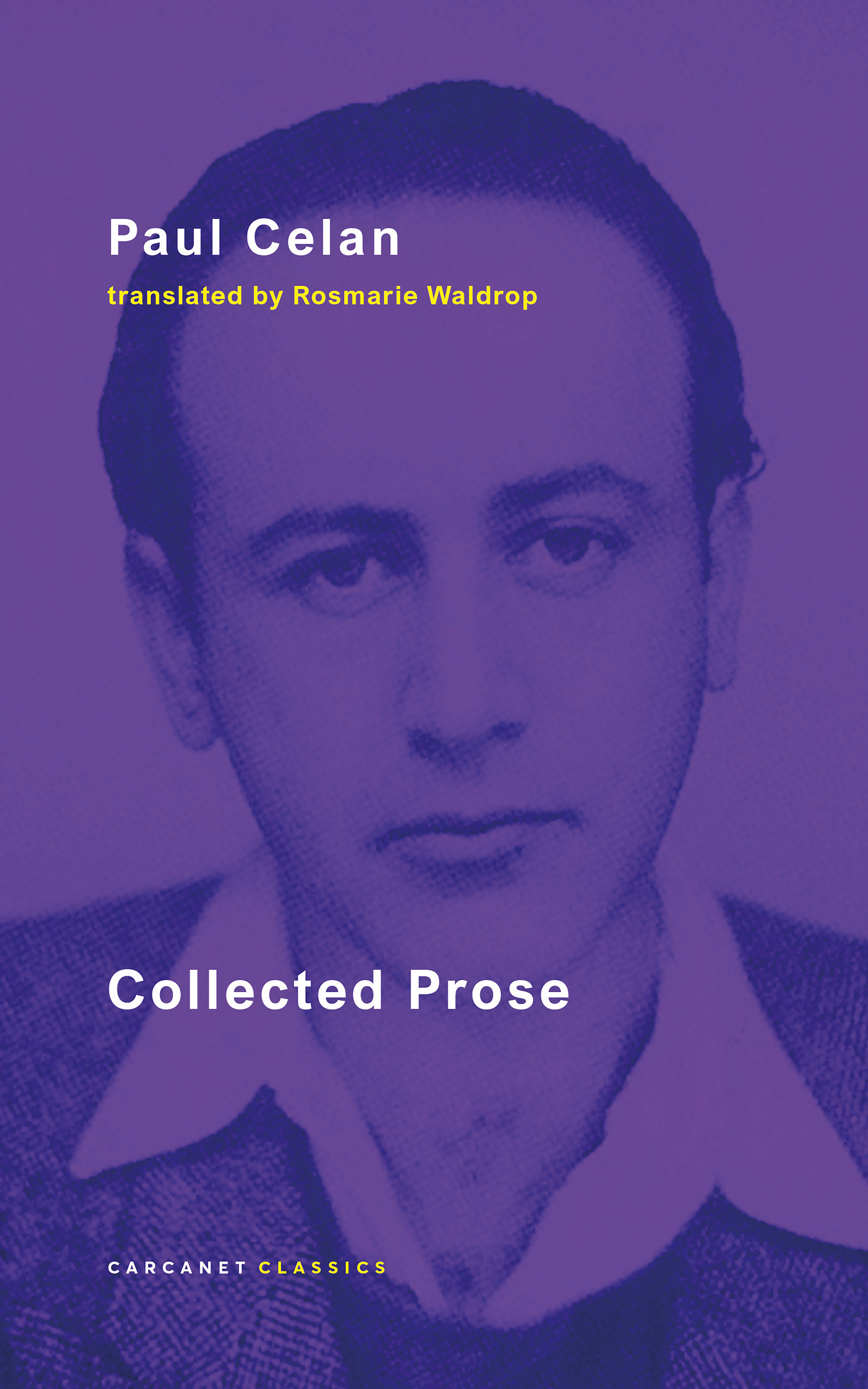
Paul Celan (1920–70) stands as one of the greatest post-war European poets, a writer whose painful struggle with the possibilities and limitations of German, his native language, has helped to define the response of poetry in the aftermath of the Holocaust. Celan's prose is as thought-provoking as, and less familiar than, his poetry. The writings and aphorisms on poetry and art illuminate the sources of his language: he explores the condition of being a stranger in the world, the necessity – and limitation – of discourse, enlarging our understanding of the poet and his vocation. A spare and reluctant prose writer, Celan speaks with a quiet authority that insists on the centrality of poetry in the modern world. Rosmarie Waldrop's translation remains true to the poetic rhythms of Celan's prose; her introduction sets the pieces in context.
Ta pozycja jest dostępna przez Internet. Rozwiń informację, by zobaczyć szczegóły.
Dostęp do treści elektronicznej wymaga posiadania kodu dostępu, który można odebrać w bibliotece.
E-book
W koszyku
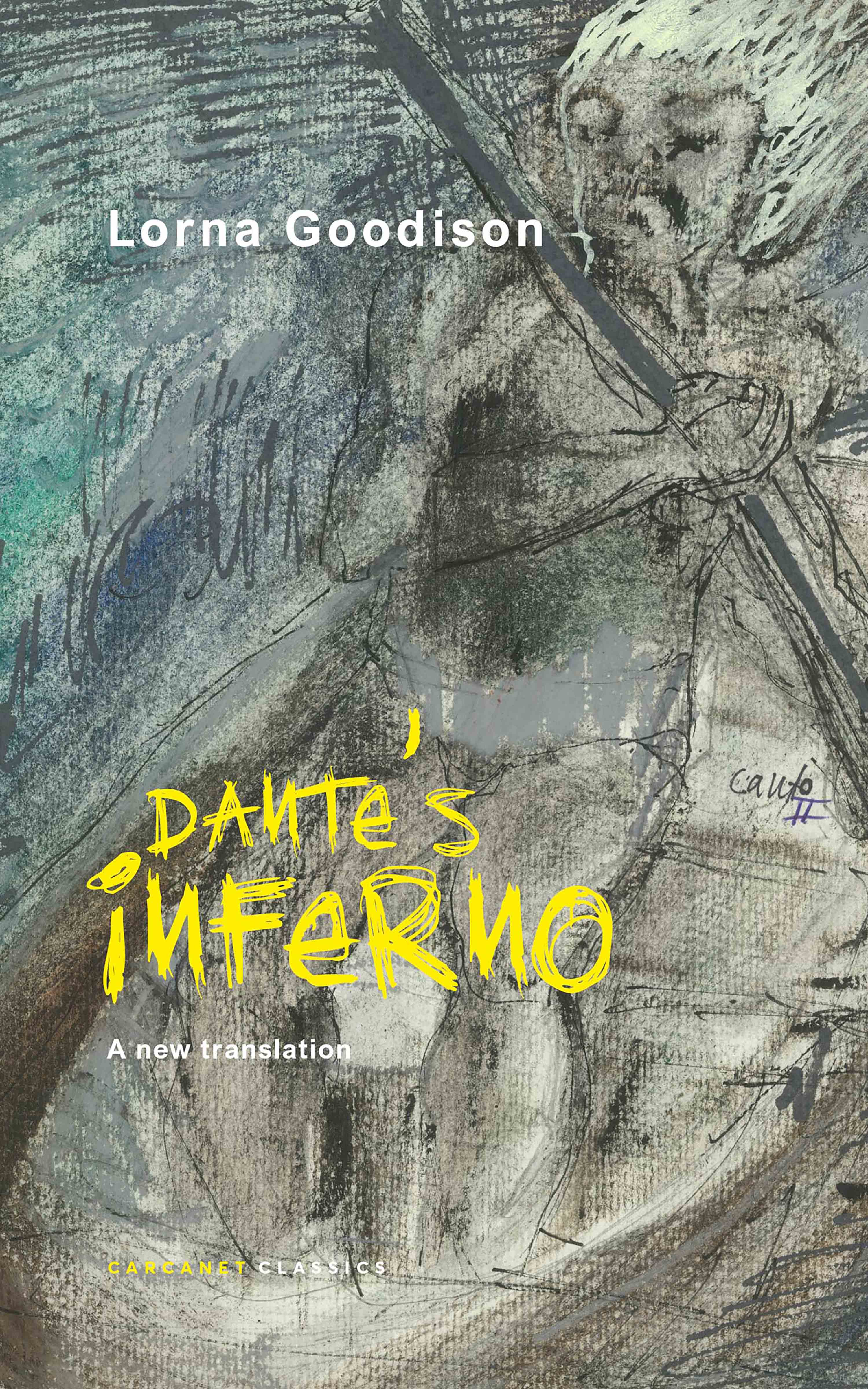
'Halfway tree. The journey of our life found me / there at midnight in a ramshackle state.' So begins Lorna Goodison's astonishing new translation of The Inferno by Dante, a poet she once described as 'uncompromising as an Old Testament prophet, stern as a Rastafarian elder'. This Jamaican Dante, a quarter-century in the making, is as much transformation as it is translation: the poet's narrator, its Dante figure, is now guided through an underworld by Goodison's great Jamaican predecessor Louise Bennett, 'Miss Lou' in the book. Goodison draws on the entire continuum of Jamaican speech yet securely grounds the action in Dante's formal architecture, bringing an entire world to life: we encounter other poets, including Goodison's friend Derek Walcott, as well as Caribbean politicians, reggae innovators and other public figures. Here, she recreates the journey through the 'unpaved and rocky road' of Dante's Hell for a contemporary audience and attempts to do for Caribbean vernacular what Dante did for his Italian language in the fourteenth century – endow it with an entirely new vocal music and power.
Ta pozycja jest dostępna przez Internet. Rozwiń informację, by zobaczyć szczegóły.
Dostęp do treści elektronicznej wymaga posiadania kodu dostępu, który można odebrać w bibliotece.
E-book
W koszyku
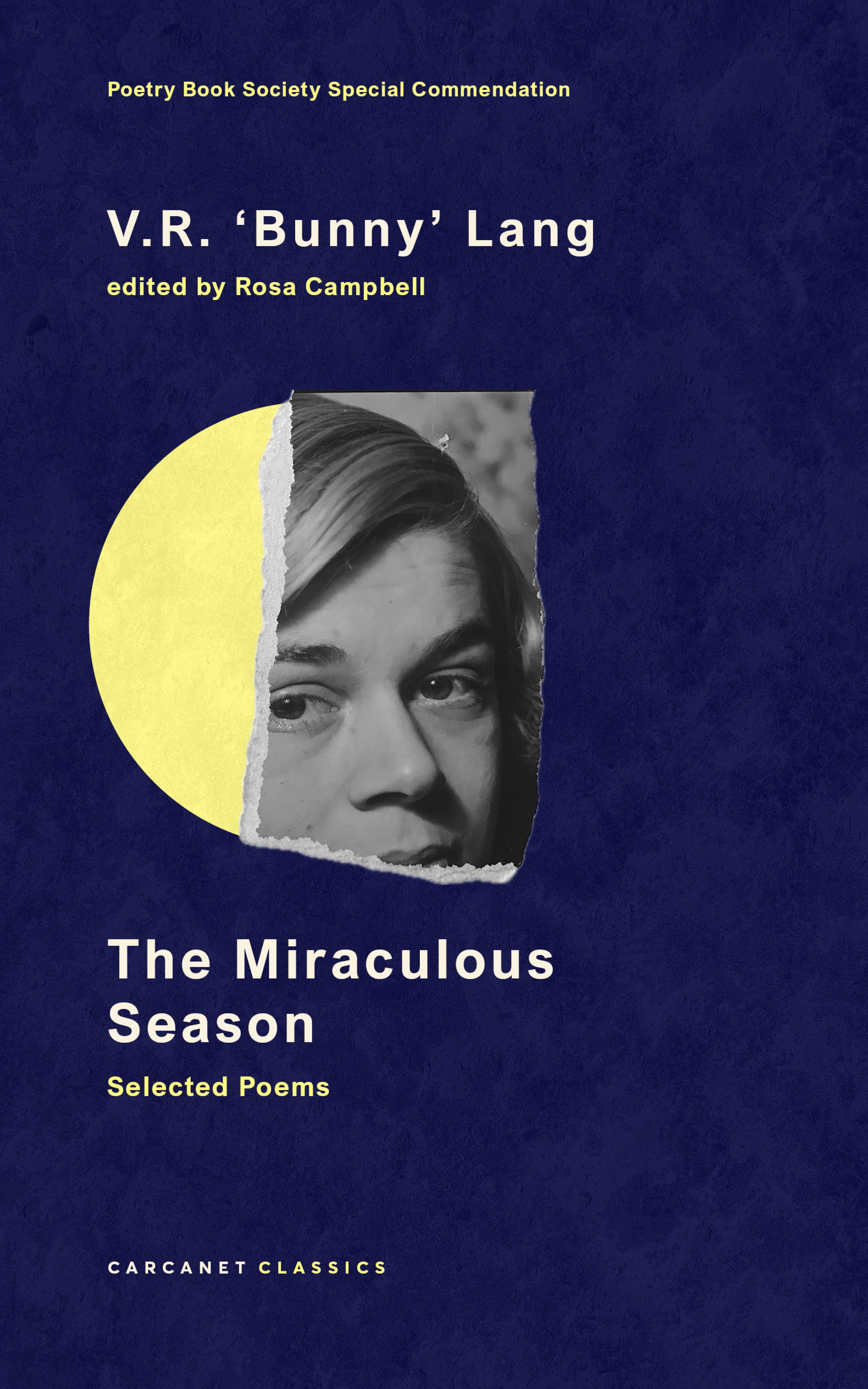
A Poetry Book Society Spring Special Commendation 2024 In the archives of the Houghton Library at Harvard blazes the incandescent work of V.R. 'Bunny' Lang (1924–56), the American poet and playwright whose name has been all but erased from literary history. The fiery nerve centre of the literary scene around mid-century Harvard, and best friend of the iconic New York School poet Frank O'Hara – who referred to her as 'one of our finest poets' – Lang herself has languished in the shadows of American poetry for too long. This book brings into print some of Lang's most startling, strange, and beautiful poetry, much of which has never been published before, drawing her into the spotlight at last. It includes an editor's introduction by scholar and writer Rosa Campbell, on Lang's fascinating and often hilariously eccentric life, devastatingly early death, and her rightful place in the canon of twentieth-century American poetry. The Miraculous Season, published in Lang's centenary year, is a revelation of the true breadth and brilliance of her poetry, rediscovered and made available in print for the first time since 1975.
Ta pozycja jest dostępna przez Internet. Rozwiń informację, by zobaczyć szczegóły.
Dostęp do treści elektronicznej wymaga posiadania kodu dostępu, który można odebrać w bibliotece.
E-book
W koszyku
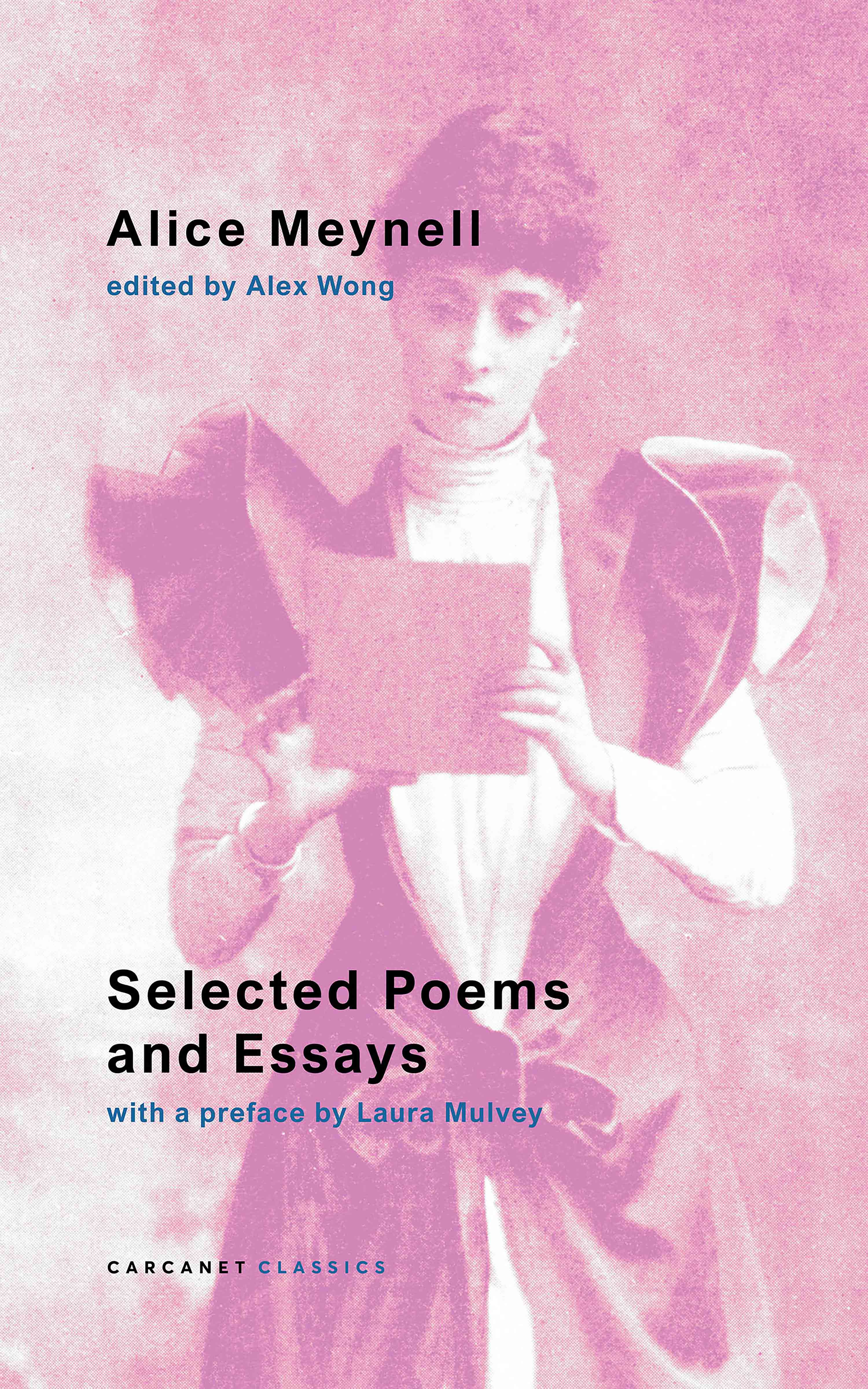
Alice Meynell was a major British author of the late nineteenth and early twentieth centuries. This is the first anthology of her verse and prose to be published for over seventy-five years. Meynell was highly regarded both as a poet and as a writer of essays and was seriously proposed for the laureateship on two occasions. G.K. Chesterton said of her that she 'never wrote a line, or even a word, that does not stand like the rib of a strong intellectual structure; a thing with the bones of thought in it'. The present selection includes the early romantic poems of yearning, full of poignant surprises, and the terser, less personal poems of her maturity. Also included is a broad sample of Meynell's literary essays, in each case a careful work of art. They include reflections on literature, culture and the natural world, nuanced observations on childhood, and moving defences (both specific and general) of women against trespasses on their dignity. This selection is introduced by Alex Wong, who offers a poet's view of Meynell's distinctive artistic achievements and locates her within her literary contexts. It also includes an appreciative preface by the renowned feminist critic and theorist Laura Mulvey, who is the author's great-granddaughter.
Ta pozycja jest dostępna przez Internet. Rozwiń informację, by zobaczyć szczegóły.
Dostęp do treści elektronicznej wymaga posiadania kodu dostępu, który można odebrać w bibliotece.
E-book
W koszyku
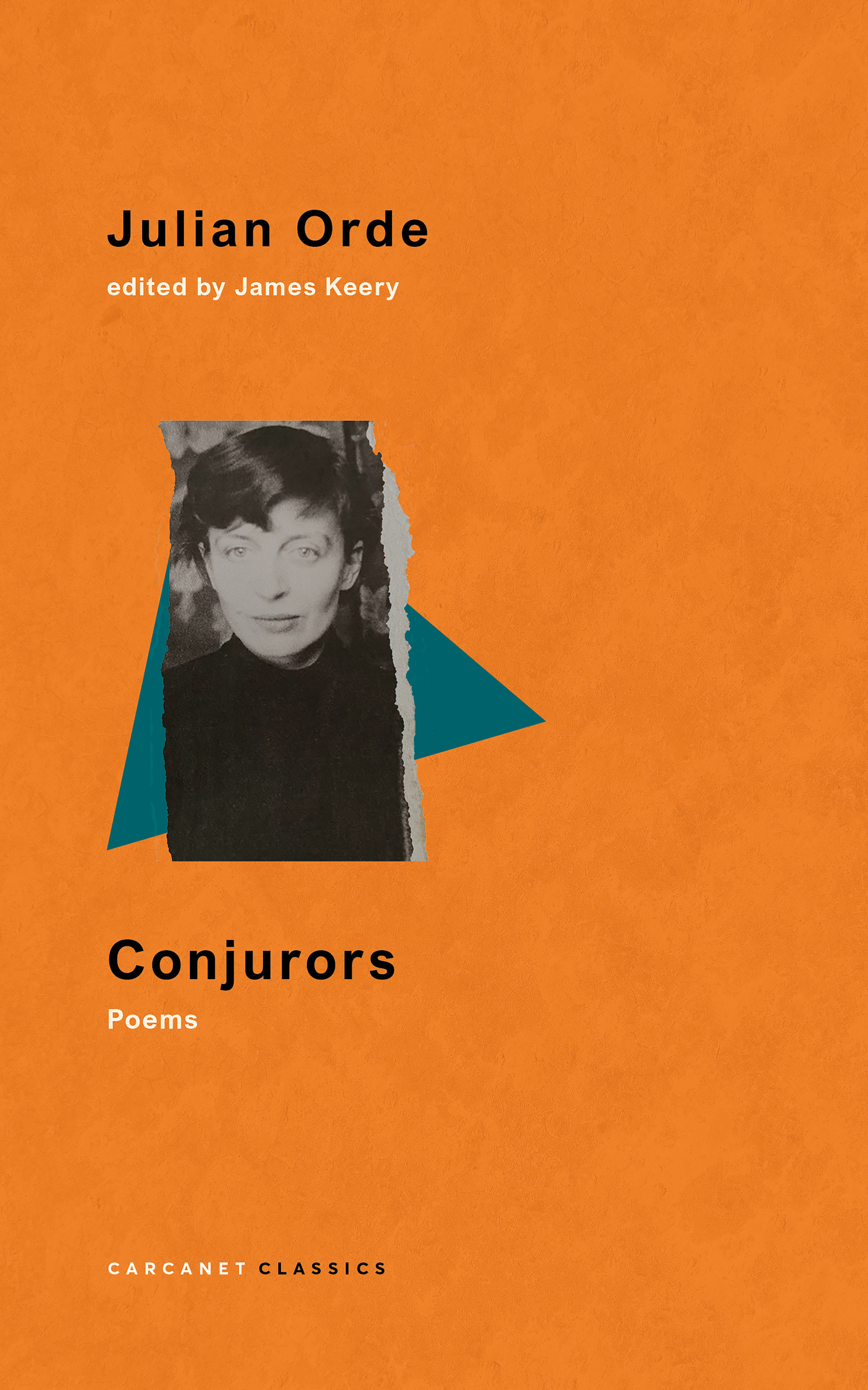
Conjurors / Julian Orde. - [miejsce nieznane] : Carcanet Classics : Legimi, 2024.
A Telegraph Book of the Year 2024 In Conjurors, a major poet is revealed for the first time. Julian Orde (1917–74) published only in magazines during her lifetime. A friend of Stevie Smith and an intimate of Dylan Thomas and W.S. Graham, she was one of those 'peripheral figures' who turns out to be a centre in her own right. Her evolving worlds and changing landscapes as a writer come alive in these substantial, unexpected poems. Her lyrical surrealism is prophetic and retains its charge: The speckled water rippled into minnows, Of worms and turf smelt all the fish pale morning, Earth pushed up its smell of worms through grass and wet, Through sodden leaf, mushroom and winking frog. I, on the bank, lived quick as breathing frog, Its lungs and mine puffed out September's thin Morning, sallow and silver, fish-filled, the sky in a river. Wherever I go in the guilty years there still Goes my innocence with me [...] William Empson celebrated her. 'Wonder at nature, wonder at all experience, is her note, and she gets a great deal of variety into it; also she has a beautiful ear, and a supply of unforced humour.' The editor of PN Review said, 'It's hard to imagine the middle of the twentieth century now without Julian Orde.' Carcanet's recovery of her work – thanks to the patient archaeology of James Keery and V. Beatson – proves that the past, even the relatively recent past, is at least as rich in resource and surprise as the present.
Ta pozycja jest dostępna przez Internet. Rozwiń informację, by zobaczyć szczegóły.
Dostęp do treści elektronicznej wymaga posiadania kodu dostępu, który można odebrać w bibliotece.
E-book
W koszyku
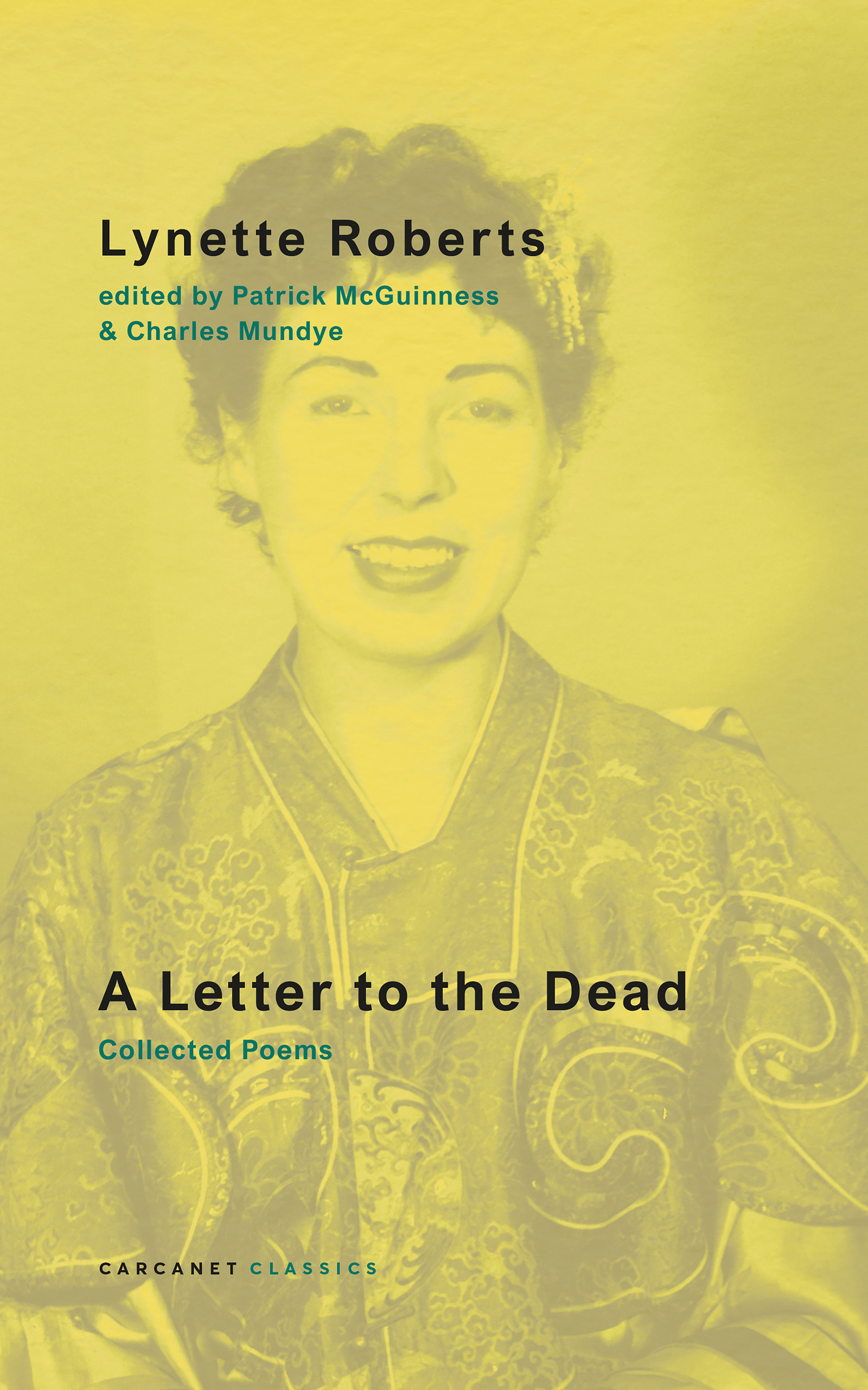
'Between now and then, I will offer you A fist full of rock cress fresh from the bank The valley tips of garlic red with dew Cooler than shallots, a breath you can swank In the village when you come. At noon-day I will offer you a choice bowl of cawl Served with a 'lover's' spoon and a chopped spray Of leeks or savori fach, not used now, In the old way you'll understand. The din Of children singing through the eyelet sheds Ringing smith hoops, chasing the butt of hens' Lynette Roberts is one of the most astonishing and brilliant poets of the twentieth century. Though published by T.S. Eliot and Faber in the 1940s and '50s her work unjustly fell off the radar for many years until the groundbreaking edition of her collected poems published by Carcanet in 2005. Twenty years on, this new edition contains an additional sixty-five previously uncollected and unpublished poems by Roberts, and a new epilogue highlighting her growing importance to our understanding of twentieth-century poetry.
Ta pozycja jest dostępna przez Internet. Rozwiń informację, by zobaczyć szczegóły.
Dostęp do treści elektronicznej wymaga posiadania kodu dostępu, który można odebrać w bibliotece.
E-book
W koszyku
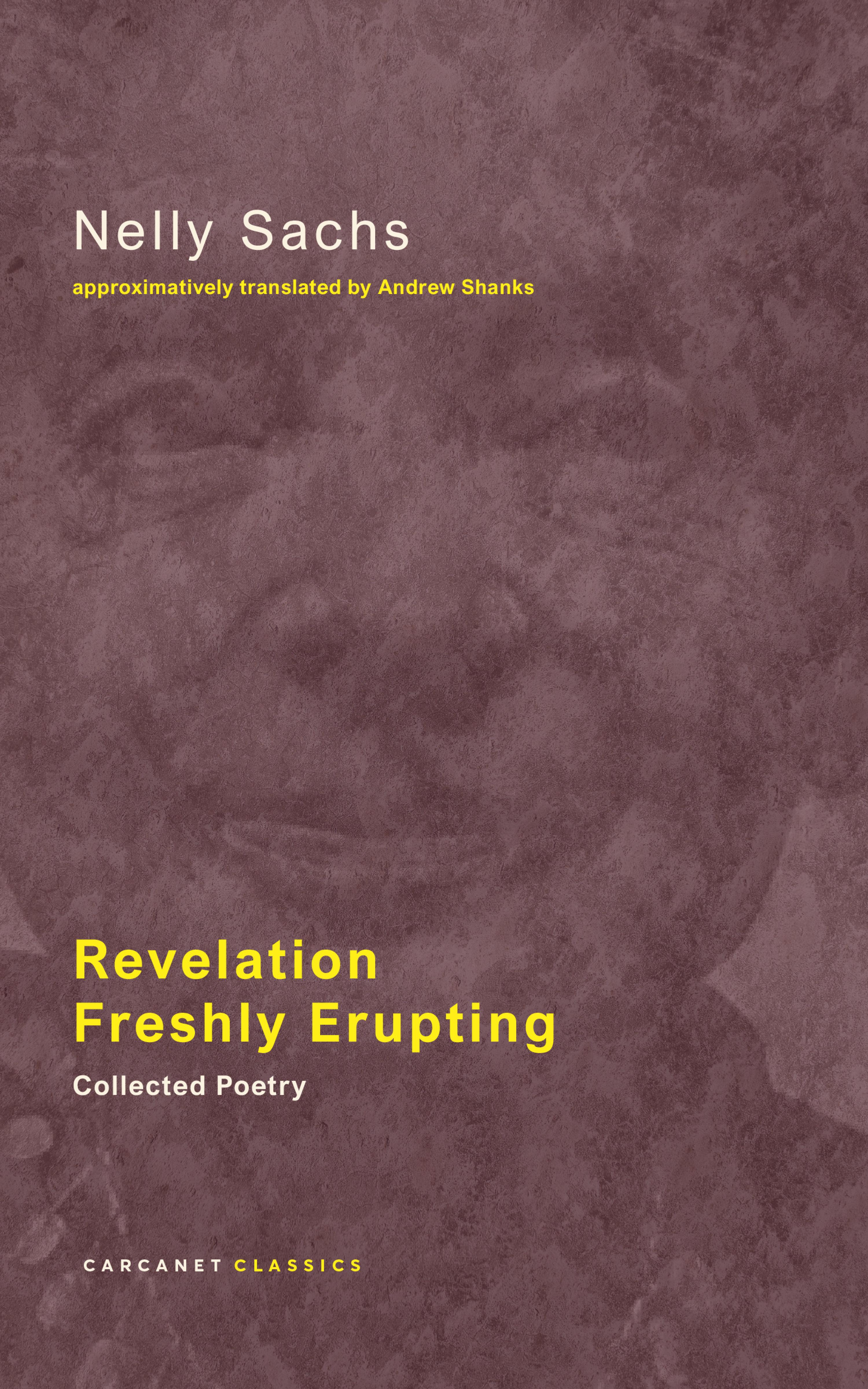
Winner of the Warwick Prize for Women in Translation 2024 Winner of the Schlegel-Tieck Prize 2024 The Jewish poet Nelly Sachs (1891–1970) writes in direct response to the Holocaust. She is uniquely a 'prophetic' poet, one of the greatest of that species in the twentieth century. Her first book appeared in the immediate wake of the Second World War, in 1946. Since that time, Hans Magnus Enzensberger declared, 'she has been writing fundamentally a single book'. That book is represented in this volume which reveals her whole progression rendered into English. Unlike earlier translators, Andrew Shanks calls his versions 'translations/imitations', moving away from the doggedly literal to render more faithfully the sense and intention of the originals. Sachs escaped Berlin in May 1940. She found refuge in Sweden. Her major work is an evolving response to the trauma of the Holocaust. In 1966 she received the Nobel Prize for Literature. This book includes all the lyric poetry Sachs published in her lifetime and adds the posthumous collection Teile dich Nacht, an introductory essay, and notes. Her poetry begins as a monumental lament for the victims of the Holocaust. Other themes develop: biblical, Kabbalist and religious allusions, personal bereavement, mental breakdown. And there are reflections on poetic vocation in the darkness of recent history.
Ta pozycja jest dostępna przez Internet. Rozwiń informację, by zobaczyć szczegóły.
Dostęp do treści elektronicznej wymaga posiadania kodu dostępu, który można odebrać w bibliotece.
Pozycja została dodana do koszyka. Jeśli nie wiesz, do czego służy koszyk, kliknij tutaj, aby poznać szczegóły.
Nie pokazuj tego więcej